
Most runners spend their training time on mileage, pace work, and interval sessions, while the strength and stability work that actually keeps a stride efficient and injury-free gets pushed aside. Pilates fills that gap directly, building the core control, hip stability, and muscular balance that running alone does not train. This is why Pilates classes in Dubai have become a regular part of many runners’ weekly routines, alongside their usual mileage rather than in place of it.
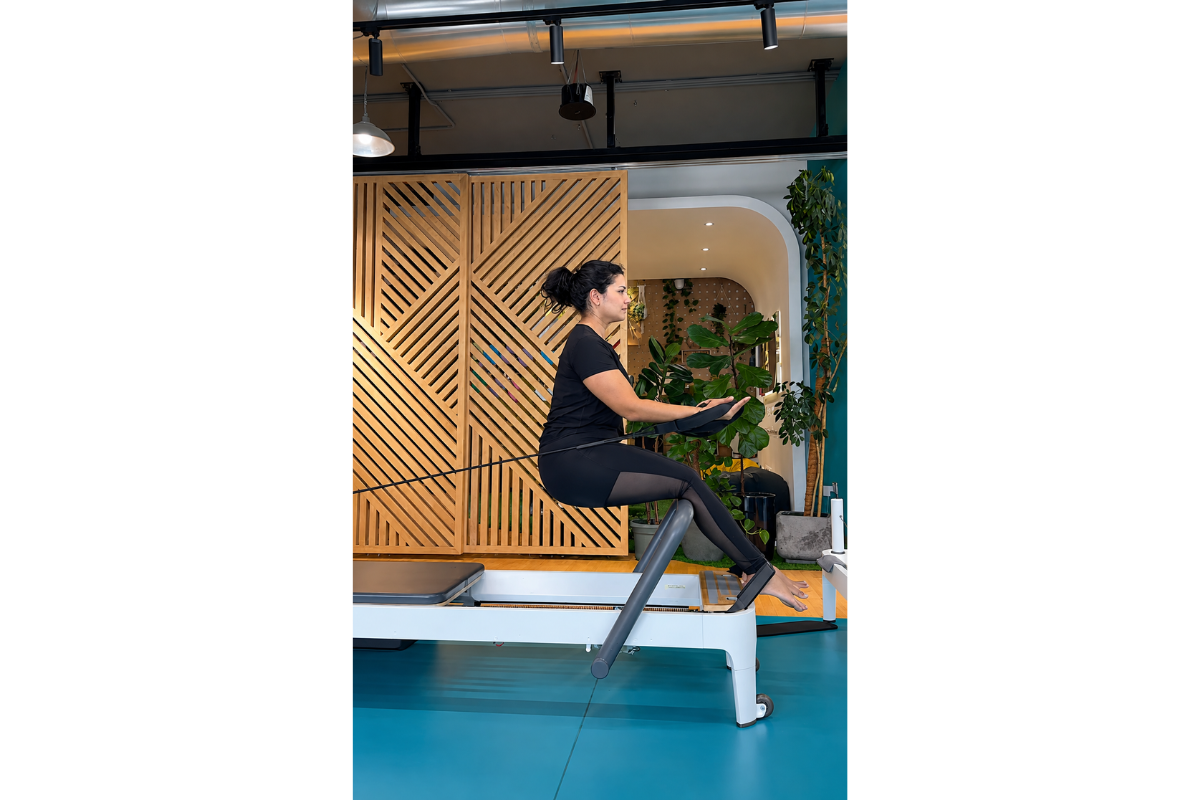
Why Runners Need More Than Just Running
Running is a repetitive, single-plane movement, and over time that repetition creates predictable imbalances. Quads tend to dominate over glutes, hip flexors tighten from repeated forward motion, and the deep core muscles that should stabilize the pelvis with every stride often stay underused. These imbalances are a common contributor to overuse injuries such as IT band syndrome, shin splints, and runner’s knee. Pilates addresses these gaps through controlled, full-body movement that emphasizes alignment, core engagement, and pelvic stability, all of which running on its own rarely develops.
How Pilates Builds Speed
A stable core supports more efficient power transfer from the lower body into the ground with each stride, which means less energy gets lost stabilizing an unsteady trunk. Exercises that activate the glutes and hip flexors directly support stride power and length, while the lateral breathing technique used throughout Pilates can improve breath control over longer distances. None of this replaces speed work, but it gives the muscles supporting each stride a stronger foundation to work from.
How Pilates Builds Stability
Much of Pilates training happens on a single leg or in positions that challenge balance, which mirrors the single-leg loading that happens with every running stride. Exercises that target the hip abductors and glute medius help control excessive pelvic drop or rotation, a common inefficiency that wastes energy and increases injury risk over the course of a run. Better ankle and knee alignment, built through slow, controlled movement, also carries over directly into how a runner’s joints track during faster efforts.
How Pilates Reduces Injury Risk
Balanced muscle development is one of the more direct ways Pilates reduces injury risk for runners. Strengthening stabilizer muscles that running alone does not sufficiently train, combined with controlled range-of-motion work that improves joint mobility, addresses many of the underlying imbalances that eventually show up as overuse injuries. Runners who add Pilates to their training often notice fewer nagging aches in the hips, knees, and lower back over time.
Pilates Moves That Specifically Benefit Runners
- Pelvic curls (bridging). Activates the glutes and hamstrings while teaching pelvic control, both essential for stride power and lower back protection during long runs.
- Single-leg stretch. Builds core stability and hip flexor strength in a pattern that closely mirrors the single-leg loading of each running stride.
- Side-lying leg series. Targets the hip abductors and glute medius, muscles that stabilize the pelvis with every step and are commonly underdeveloped in runners.
- Swimming exercise. Builds coordinated extensor strength through the back, glutes, and shoulders, supporting posture and arm drive during longer distances.
- Footwork on the reformer. Strengthens the feet, ankles, and calves through controlled resistance, improving push-off power and ankle stability on uneven terrain.
- The hundred. Builds deep core endurance and coordinated breathing, both of which support trunk stability over the length of a run.
- Spine stretch forward. Improves spinal mobility and hamstring flexibility, helping maintain an efficient, upright running posture as fatigue sets in.
Building Pilates Into a Running Routine
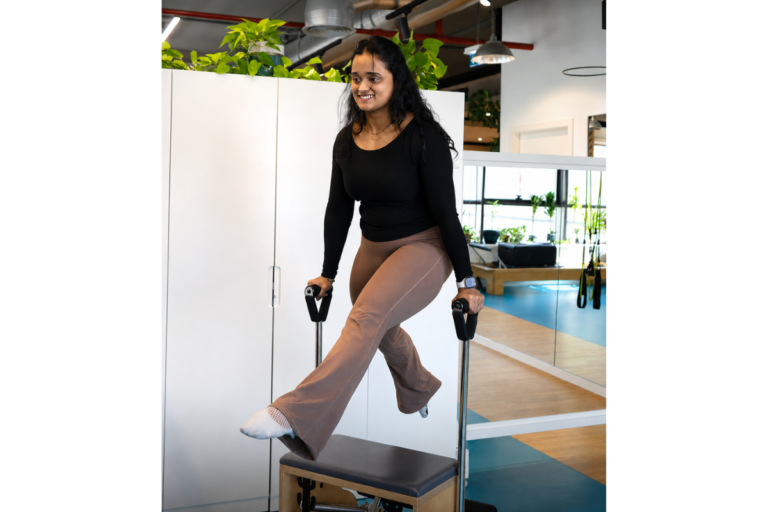
Most runners see the best results adding Pilates one to two times a week, on easy run days or rest days rather than immediately before a hard session. Starting with mat-based fundamentals before progressing to reformer work gives the body time to build the core control needed before adding external resistance. Pilates classes in Dubai are often structured around small groups, which allows an instructor to correct form and adjust exercises to a runner’s specific imbalances rather than running through a generic routine.
Choosing the Right Pilates Studio as a Runner
Runners get the most benefit from a studio where instructors understand sport-specific training and can assess individual movement patterns rather than teaching a one-size-fits-all class. A studio offering both mat and reformer options also allows a runner to progress from foundational core work into more targeted strength and stability training over time. PAD Pilates & Dance, based in The Greens, works with clients across a range of fitness backgrounds, including runners looking to build strength and stability alongside their regular training.
Conclusion
Running builds endurance and speed, but it rarely builds the core stability, hip strength, and muscular balance that keep a stride efficient and injury-free over time. Pilates fills that gap directly, and the specific moves covered above target the exact areas that running alone tends to leave underdeveloped. Runners exploring Pilates classes in Dubai can reach PAD Pilates & Dance at their studio in The Greens, by phone at +971 4 2941745, or through the contact page at thepadfitness.com to book a first session.
Frequently Asked Questions
One to two sessions a week is typical for most runners, ideally scheduled on easy run days or rest days rather than right before a hard training session.
Not immediately. Pilates builds the core stability and muscular balance that support speed work and running economy over time, rather than acting as a direct substitute for speed training itself.
Mat Pilates on its own can meaningfully improve core stability and muscular balance for runners. Reformer work adds resistance and can build on that foundation once the fundamentals are solid.
Pilates is often used to support recovery and rebuild strength around an existing injury, but it should be introduced alongside guidance from a physiotherapist or doctor if the injury is still active.
Yes. Pilates classes are typically structured to accommodate different fitness levels, and an instructor can adjust exercises for someone new to the format while still targeting the areas most relevant to running.