Reformer Pilates has become Dubai’s biggest fitness trend in 2026 because it delivers visible, research-backed results in low-impact sessions that fit into busy schedules, and because the city’s fitness culture has shifted toward workouts people genuinely want to repeat rather than routines they force themselves into.
At The PAD Pilates & Dance, we have watched this shift happen from inside a boutique studio in The Greens, where Reformer Pilates sits alongside dance and rehabilitation under one roof. Founded in 2018 by Shaazia Qureishi and Abbas Kanchwala, The PAD brings together certified instruction and small class sizes. This guide breaks down what is actually driving the frenzy for reformer Pilates in Dubai, what the research says about why it works, and how to know if it is the right fit for you.
What's driving the reformer Pilates boom in Dubai:
Dubai’s fitness scene has moved from generic gym memberships toward workouts chosen for how they make people feel, not just how many calories they burn. Dubai’s fitness scene in 2026 is less about forcing a routine and more about choosing a style people genuinely want to repeat, and reformer Pilates has become the clearest example of that shift. If reformer Pilates has been creeping into every group chat, 2026 is the moment it becomes official, with Form Fest, described as Dubai’s first dedicated Pilates festival, having run in Business Bay in February.
The numbers back up what is visible on the ground. The global reformer Pilates market was valued at approximately 8.29 billion US dollars in 2026 and is projected to reach 16.81 billion US dollars by 2035, growing at a compound annual rate of around 8.2 percent. Locally, Pilates has quietly become one of Dubai’s fastest-growing fitness disciplines, with reformer studios from Dubai Marina to Downtown fully booked weeks in advance.
What reformer Pilates actually is:
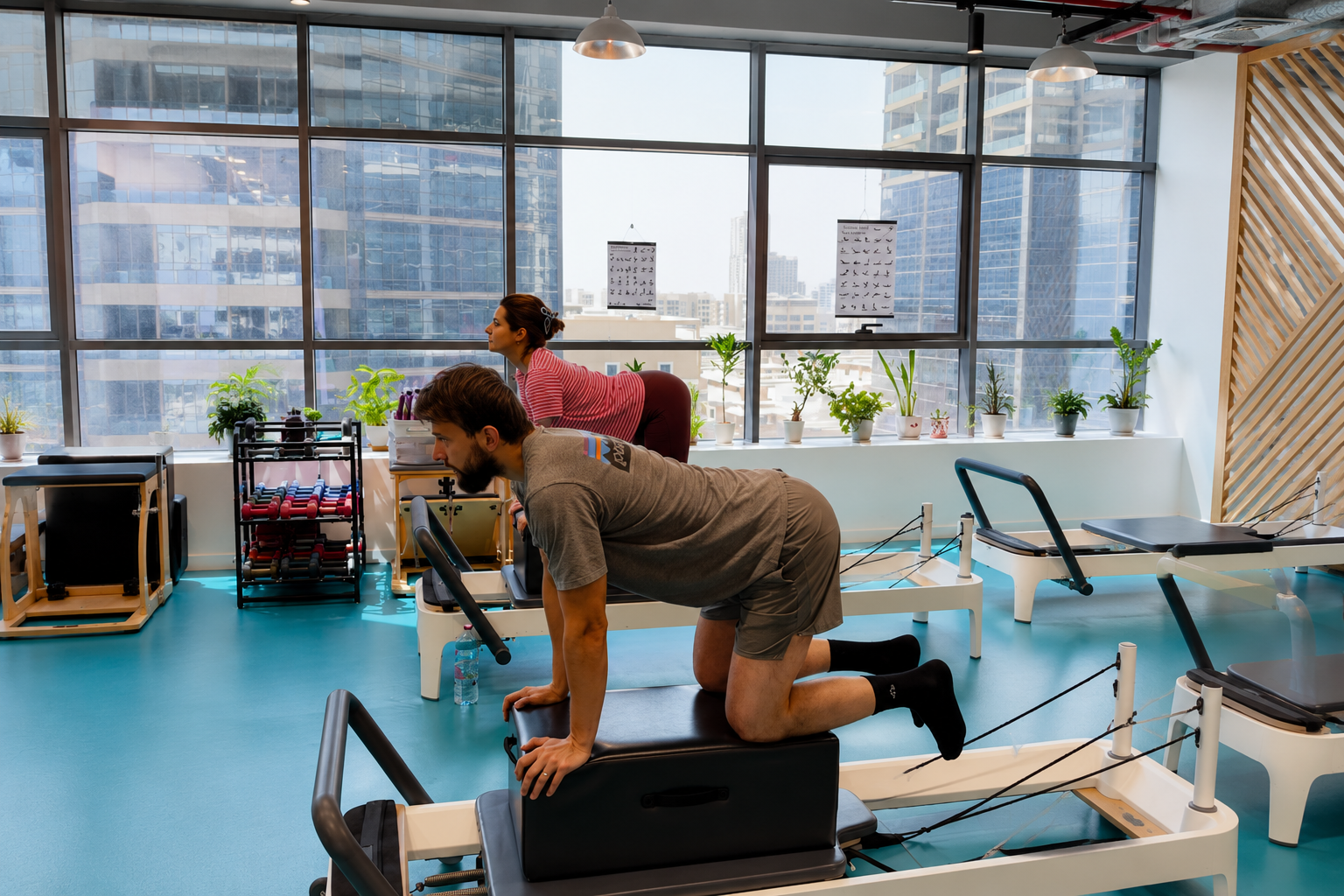
Reformer Pilates is performed on a sliding carriage connected to a frame by springs, which create adjustable resistance as you push and pull against it. Unlike mat Pilates, which relies on body weight alone, the reformer lets an instructor dial resistance up or down for each exercise, making it accessible for complete beginners while still challenging for advanced practitioners.
It is worth distinguishing the reformer from other equipment you will hear about at a studio. The Wunda Chair and the Cadillac are also Pilates apparatus, each targeting different ranges of motion and stability challenges, while the MOTR is a rebounder-style tool used to add rotational and cardio elements to a session. The reformer is also frequently confused with Lagree, a separate method that uses a different machine, the Megaformer, and focuses on slow, high-intensity intervals. At The PAD, Reformer Pilates, the Wunda Chair, and the Cadillac are offered as distinct equipment-based formats, alongside class formats like the Bodhi, Aerial Pilates, and Cardiolates, so clients can build a routine around what actually challenges their body rather than a one-size-fits-all class.
The science behind why reformer Pilates in Dubai works:
Reformer Pilates is not just a trend built on aesthetics. A randomized controlled trial found that Reformer Pilates improves body composition, increases muscle strength and endurance, and reduces depression and anxiety in participants who trained three times a week over eight weeks. Separate research on sedentary women found that Reformer Pilates may be more effective on cognitive function compared to no exercise at all, and a study on people with chronic musculoskeletal pain found that regular Reformer Pilates sessions reduced pain perception and improved how participants coped with pain.
What research measured | Typical result | Timeframe |
Core endurance | 20 to 30 percent increase | 12 consistent weeks |
Flexibility | 15 to 25 percent improvement | 12 consistent weeks |
Chronic pain and coping | Meaningful reduction in pain perception | Regular sessions |
Depression and anxiety | Moderate reduction | 8-week, 3x weekly programme |
Did you know: the reformer was one of the first pieces of equipment Joseph Pilates ever designed, originally built using bed springs to help bedridden patients maintain strength. Nearly a century later, the same spring-resistance principle is still what makes the machine effective for everyone from elite athletes to people recovering from injury.
What sets The PAD apart in Dubai's reformer Pilates scene:
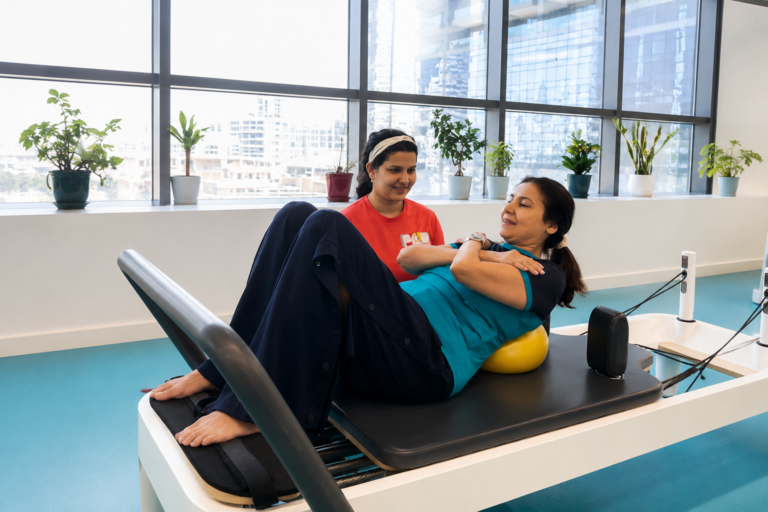
With so many new reformer studios opening across the city, what a session actually looks like matters more than the trend itself. At The PAD, group classes are capped at a small number of participants so instructors can correct form in real time rather than letting technique slide in a crowded room. Shaazia Qureishi, a certified Fletcher Pilates instructor, built the studio’s approach around mindful movement and individual care, which is part of why clients recovering from injuries and clients training for performance end up in the same welcoming space. The PAD is located at Onyx Tower 1 in The Greens, making it accessible for clients across Al Barsha, Dubai Marina, JLT, and Media City who are searching for Reformer Pilates near their neighbourhood without wanting to compromise on instruction quality.
Getting started
Dubai’s reformer Pilates boom is not slowing down in 2026, and the studios that will matter are the ones combining that momentum with real instruction quality rather than just a trend-driven aesthetic. If you are ready to try it for yourself, The PAD’s intro package gets you 40 per cent off your first three group classes, a low-pressure way to see if Reformer Pilates in Dubai fits your goals before committing further.
Book your first Reformer Pilates session at The PAD today.
Frequently Asked Questions
Yes. The reformer’s adjustable spring resistance means an instructor can scale every exercise to your current fitness level, which is part of why it works equally well for first-timers and experienced athletes.
Most of the research showing measurable gains in core endurance, flexibility, and pain reduction used sessions two to three times a week over 8 to 12 weeks, though individual results vary.
Reformer Pilates is widely used in rehabilitation settings because it is low-impact and easily adjustable, but anyone with an existing injury or medical condition should consult their doctor and inform their instructor before starting.
Fitted, stretchy clothing and grip socks are standard, since loose fabric can catch on the reformer’s springs and carriage.