Most people do not think about their lower back until it hurts. And by then, the damage has often been building quietly for months, maybe years. A slightly off posture at a desk. Sitting for too long in a car. Carrying tension in all the wrong places. Lower back pain rarely arrives as a dramatic event. It creeps in, and then one day it is simply there.
If that sounds familiar, you are not alone. Research shows that the lifetime prevalence of lower back pain sits somewhere between 70 and 80 per cent of adults, making it one of the most common physical complaints in the world, and yet for something so widespread, it is still widely mismanaged, often treated with rest, painkillers, or vague advice to “take it easy.”
The good news is that there is a smarter, more sustainable approach. And it has been quietly transforming how people move and feel for decades.
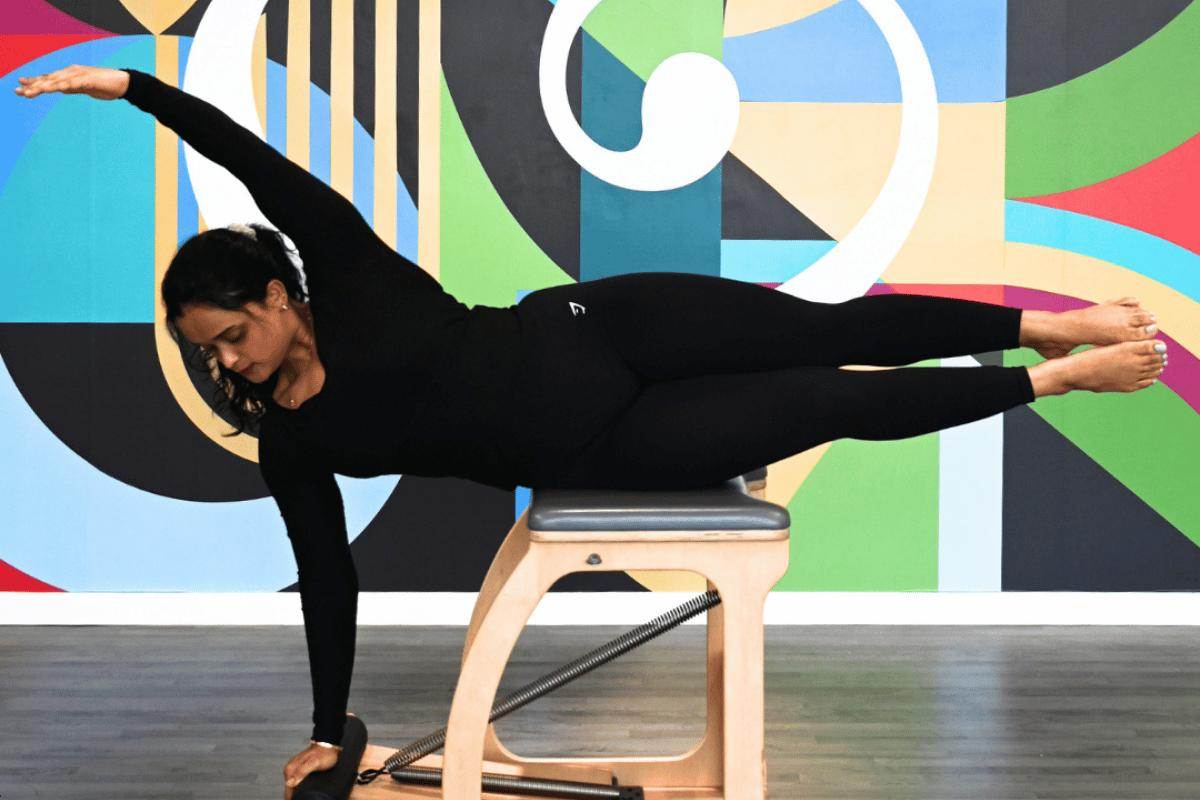
Why Pilates Works for Lower Back Pain
Pilates for lower back pain is not a new idea, but the research behind it is becoming increasingly hard to ignore. A comprehensive systematic review and meta-analysis found that Pilates can meaningfully decrease lower back pain compared to no exercise and even outperform other general exercise programmes, leading researchers to recommend it as an effective strategy for managing lower back pain across the general population. PubMed
So why does it work so well? It comes down to what Pilates actually targets.
Why Pilates Is Particularly Well Suited to This Moment
Not all exercise is equal when it comes to easing back in. High-intensity training, heavy lifting, and long cardio sessions all place significant demand on a body that may still be recalibrating. Pilates, by contrast, is low-impact, controlled, and deeply attentive to how your body is actually moving.
A Pilates session after Ramadan works on several levels at once. It reawakens the core muscles that tend to switch off during periods of low activity. It gently restores mobility and flexibility without forcing the range of motion. It brings your breath back into focus, which has its own calming and energising effect. And it does all of this at a pace that your body can absorb rather than resist.
It is also worth noting that Pilates is highly adaptable. A good instructor at the best Pilates studios will read where you are on any given day and adjust accordingly. If you are feeling strong, you are challenged. If you are still finding your feet, you are supported. That responsiveness is particularly valuable when you are returning after a break.
It builds the muscles that support your spine: The deep stabilising muscles around your lumbar spine, the ones that hold everything in alignment, tend to weaken and disengage when you live a sedentary lifestyle or move habitually in poor patterns. Pilates directly and precisely reactivates these muscles in a way that most other forms of exercise simply do not.
It addresses the root cause, not just the symptom: Pain relief from a painkiller wears off. The core strength, postural awareness, and movement control you develop through Pilates become a part of how you carry yourself every single day.
It trains how you move: Lower back pain is often as much a movement problem as it is a structural one. Pilates teaches you how to move your spine safely, how to hinge at the hips correctly, and how to distribute load across your body rather than absorbing it all in one place.
It is gentle enough to start even when you are in pain. Unlike high-impact exercise that can aggravate inflammation, Pilates is low-impact by design. Researchers confirm it is a safe tool to apply to most people experiencing lower back pain, even in the earlier, more acute phases.
What to Expect in Your First Few Sessions
If you are coming to Pilates specifically for lower back pain, here is what the initial journey often looks like.
Weeks 1 to 2: The focus is on breath, body awareness, and gentle activation. You will learn how to find and engage your deep core, how to move your pelvis neutrally, and how to breathe into your back body. It may feel subtle, but the neurological reconnection happening is significant.
Weeks 3 to 4: Movements become slightly more complex as your body gains confidence. You will begin to notice improved mobility in your spine and hips, and many people start to feel a reduction in their day-to-day discomfort around this point.
Beyond the first month: Studies show that after 4 to 12 weeks of Pilates, participants consistently demonstrate significant improvements in pain relief and functional ability. The longer you maintain a consistent practice, the more durable and lasting those results become.
A Note on What to Avoid
If you are dealing with an acute flare-up or an existing back condition, there are a few things worth being aware of before you begin.
Tell your instructor before class. This is not optional. A good Pilates instructor will modify exercises for you and ensure you are working safely from the very first session. Avoid any exercises that cause sharp, shooting, or worsening pain. Discomfort and effort are normal; pain is a signal to stop. Be patient with deep flexion exercises like the Roll-Up in the early stages. These are introduced progressively for good reason.
At PAD, every new client is welcomed with exactly this kind of attentiveness. Our instructors do not take a one-size-fits-all approach, because backs, like people, are all different.
Pilates for Lower Back Pain in Dubai: Why PAD
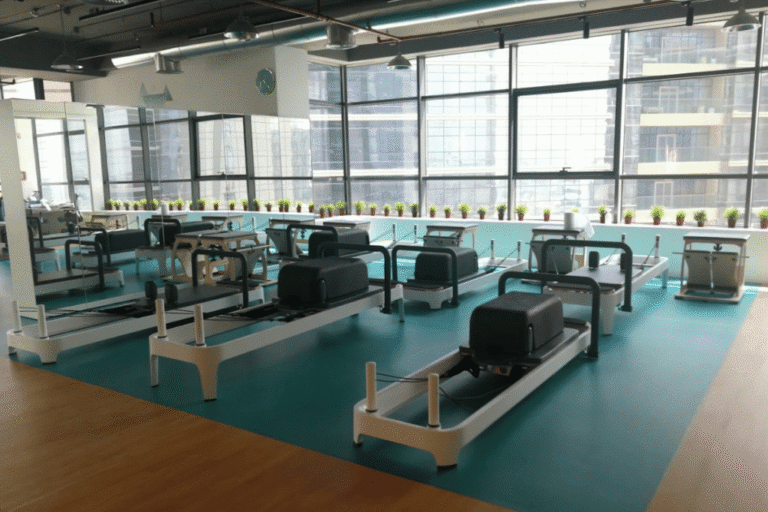
Finding a studio that genuinely understands the rehabilitative side of Pilates matters, and it is something we take seriously at PAD. Our approach to Pilates for lower back pain in Dubai goes beyond fitness. It is about helping people reconnect with their bodies, move without fear, and build a practice that makes daily life feel easier and more comfortable.
Whether you are dealing with a longstanding chronic ache, recovering from a flare-up, or simply want to be proactive about spinal health before problems develop, PAD is a place where that work is done carefully and thoughtfully.
Our instructors understand the difference between a client who needs gentle rehabilitation and one who is ready to be challenged. We also know how to guide you from one to the other at exactly the right pace.
The Bottom Line
Lower back pain does not have to be a permanent part of your life. For the vast majority of people, it is not a structural inevitability. It is a pattern, and patterns can be changed.
Pilates for lower back pain offers something that quick fixes simply cannot: a genuine, lasting improvement in the way your body moves, supports itself, and feels. The evidence backs it up. The thousands of people who have experienced it firsthand back it up even more.
Your back has been trying to tell you something. It might be time to start listening.
Ready to take the first step? Contact to find out more about our classes and book your session.