
Lower back pain has a way of interrupting everything, from work and sleep to the workouts that keep life feeling good, and the return to movement is rarely a single step. At The PAD, we think of it as a staged path: medical assessment first, then supervised rehabilitation, then Pilates, and finally regular classes. Each stage lets strength and confidence rebuild without pushing the body ahead of its capacity. Pilates for lower back pain fits into the later part of that path, once pain has settled enough for controlled, progressive exercise.
Each stage has a distinct purpose, and knowing the sequence helps people set realistic expectations and choose the right level of support along the way.
Why a Staged Approach Matters
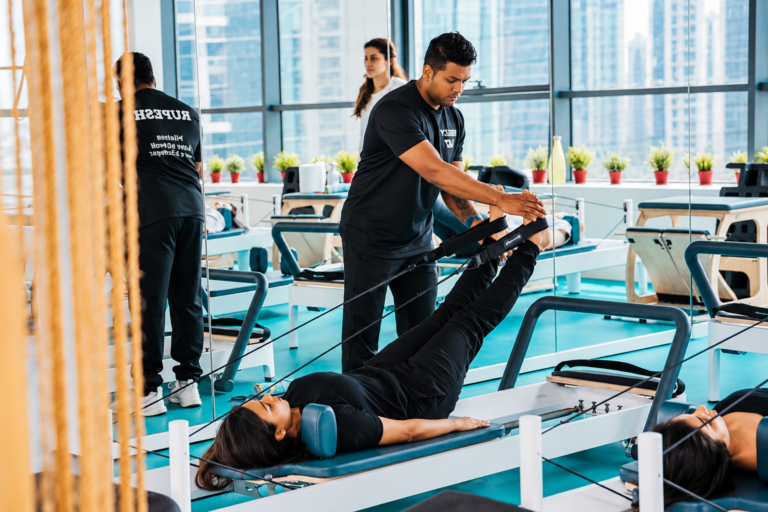
Lower back pain has a way of interrupting everything, from work and sleep to the workouts that keep life feeling good, and the return to movement is rarely a single step. At The PAD, we think of it as a staged path: medical assessment first, then supervised rehabilitation, then Pilates, and finally regular classes. Each stage lets strength and confidence rebuild without pushing the body ahead of its capacity. Pilates for lower back pain fits into the later part of that path, once pain has settled enough for controlled, progressive exercise.
Each stage has a distinct purpose, and knowing the sequence helps people set realistic expectations and choose the right level of support along the way.
Why a Staged Approach Matters
Clinical guidance describes most episodes of low back pain as improving within a few weeks to a few months, while a notable share of people report persistent pain a year later and recurrences are common. The same guidance advises staying active, self-management support, and exercise as part of care. Together, these points favour a structured return to movement rather than a long rest followed by a sudden jump back into full training.
A staged approach offers several advantages:
- Lower flare-up risk: load increases in small steps, so the back adapts instead of reacting.
- Clear milestones: each stage has its own goals, which makes progress easier to track and every step forward easier to celebrate.
- Matched support and long-term habits: one-to-one attention is used when it is most needed, group classes follow once technique and confidence are in place, and the process teaches how to manage setbacks, which matters because episodes can return.
Stage 1: Medical Clearance and Movement Assessment
The first step after a painful episode is to understand what is causing the pain and whether exercise is appropriate. A doctor or physiotherapist can rule out conditions that need medical treatment and advise on when movement can resume.
Once cleared for exercise, a movement assessment at the studio gives the instructor a clear picture of the student. It looks at:
- Posture and mobility: standing and seated alignment, and how freely the spine, hips, and shoulders move.
- Control, strength, and breathing: how the deep abdominal muscles, glutes, and back muscles work together, and whether the ribcage and diaphragm move well, since breath supports trunk stability.
- History and triggers: past injuries, the timing of pain, and daily habits such as long desk hours or commutes.
- Goals: what the student wants to return to, from pain-free workdays to sport or dance.
The assessment produces a starting point and a plan, so that every later stage is matched to the individual.
Stage 2: Supervised Rehabilitation
The second stage is about settling pain and restoring basic movement with close, caring supervision. At The PAD, this work falls under Rehabilitation, delivered by a certified instructor who adjusts every exercise to how the back responds on the day.
The priorities at this stage are:
- Calm, controlled breathing: teaching the ribcage and diaphragm to move freely, which reduces unnecessary tension through the trunk.
- Pelvic and spinal mobility: small, comfortable movements that restore range without forcing it.
- Light activation of stabilising muscles: gentle engagement of the deep abdominals, glutes and back extensors, often in lying, side-lying or supported positions of comfort.
- Pain education and daily guidance: learning the difference between mild muscular effort or stretch and sharp or worsening pain, which signals a need to stop and report it, along with advice on sitting, standing, lifting, and getting in and out of bed or a car.
There is no rush at this stage. Progress is measured in comfort and control rather than in how much work is done, and moving to the next stage depends on pain settling to a manageable level and basic movements feeling steady.
Stage 3: Introducing Pilates in Private or Semi-Private Sessions
Once pain has settled and basic control is in place, Pilates adds structured, progressive training. Pilates for lower back pain at this stage is often delivered in private or semi-private sessions, where the instructor can tailor every exercise, spring setting, and position to the individual.
The focus of this stage includes:
- Neutral spine awareness: learning to find and hold a comfortable, supported position of the spine during movement.
- Core control: building coordination between the deep abdominal muscles, pelvic floor, diaphragm, and back muscles.
- Hip, glute and thoracic work: strengthening and mobilising the areas above and below the lower back so that it is not asked to do the work of stiff neighbouring areas.
- Supported equipment work: the springs on a reformer or similar apparatus can assist or resist movement, giving feedback and support while the student builds confidence.
Repetitions are slow and controlled, linked to breath, with attention on quality instead of quantity. The instructor decides which movements to include, adapt, or leave out at each point, and the programme grows as strength, tolerance, and confidence increase.
Stage 4: Progressing to Group Classes and Building Strength
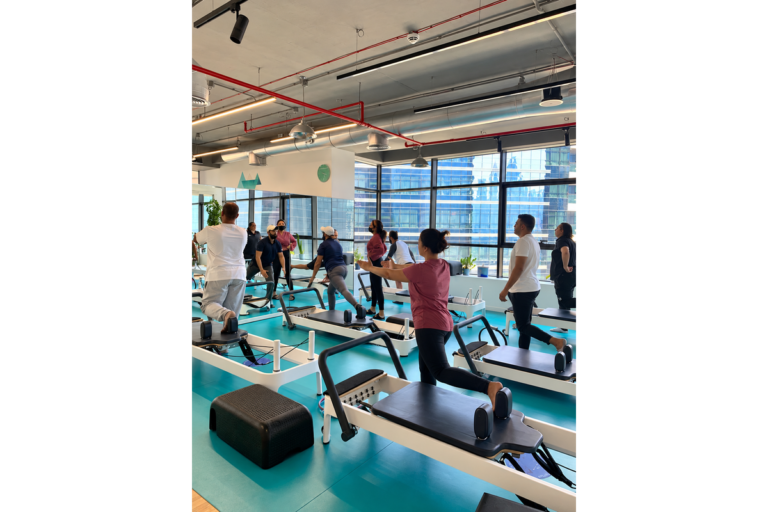
When movement feels controlled, confidence is steady, and flare-ups are infrequent, small group classes become the next step. Group sessions bring variety, pace, and the energy of training alongside others, while the instructor continues to offer modifications for individual needs.
Signs that a student is ready for this stage include:
- Reliable control: neutral spine and breathing can be maintained without constant cueing.
- Predictable response: pain does not build during or after sessions, and any soreness settles within a day or so.
- A sustainable routine: familiarity with the studio equipment and a clear weekly plan, often one to three sessions a week, that fits around work and family.
As training progresses, the work widens to include greater range and load, full-body integration, and dynamic, functional patterns such as standing work, rotation, and movements that mimic lifting, carrying, and sport. Private sessions can remain part of the routine for periodic check-ins, such as after a setback or when new goals are added.
Staying Active for the Long Term
Because back pain can recur, the end of the staged path is a maintenance routine rather than a finish line. Regular Pilates for lower back pain sessions keep strength, mobility, and body awareness in place, and daily habits carry the benefit between classes.
A Student's Story: Negin
Negin started coming to The PAD a couple of years ago after friends recommended it. She says combining reformer and stretch sessions has improved her mobility, strength, breathing, and cardio fitness while reducing shoulder and lower-back pain. She notices more soreness when she takes a break or travels, so she keeps coming back. Experiences vary from person to person, and the instructor adapts each routine to the individual.
Useful long-term habits include:
- Regular movement breaks and a supportive workstation: standing, walking or stretching at intervals through a desk day, with a supportive chair, screen at eye level, and feet flat on the floor.
- Consistent class attendance: a steady weekly schedule works better than irregular bursts of activity.
- A flare-up plan: keeping active within comfort, easing the load, contacting the instructor for adapted exercises, and seeking medical advice if pain persists.
- Recovery and stress care: adequate sleep and stress management, since tension and fatigue can make the back feel worse.
In Dubai, where hot weather encourages long hours indoors, planned movement matters even more. A studio routine provides structure that does not depend on the weather.
Signs to Seek Medical Advice First
Exercise is not a substitute for medical care. Certain symptoms call for prompt assessment by a doctor before any training begins or continues:
- Loss of bladder or bowel control, or numbness around the groin or inner thighs, which need urgent medical attention.
- Weakness, numbness or tingling in one or both legs that is getting worse, or pain that spreads below the knee with weakness.
- Back pain after a fall, accident or other injury.
- Back pain together with fever, unexplained weight loss or a general feeling of being unwell.
- Constant pain that does not ease with rest or position changes, or pain that wakes a person at night.
Students with a diagnosed condition, such as a disc problem, should share their medical advice with the
instructor so that exercises can be selected and adapted to suit.
Conclusion
Recovery from lower back pain follows a sequence: medical clearance and assessment, supervised rehabilitation, introductory Pilates in private or semi-private sessions, and then group classes and long-term maintenance. Each stage prepares the body for the next, reducing the risk of setbacks and building lasting strength. Pilates for lower back pain works best as part of this progression, with an instructor who adapts every exercise to the individual.
The PAD Pilates & Dance supports students at each stage, from Rehabilitation to Reformer Pilates classes, at our welcoming studio in The Greens, where a friendly community celebrates every step forward. To start with an assessment and a plan matched to individual goals, book a session through the studio’s contact page or call us at +971 4 2941745.
Frequently Asked Questions
Pilates can begin once a doctor or physiotherapist has cleared exercise and pain has settled to a manageable level. An instructor assessment then sets the starting point, often a private or semi-private session.
Pilates is low-impact and controlled, and a qualified instructor can adapt it to a wide range of needs. Medical advice should come first, and sharp, spreading, or worsening pain is a signal to stop and tell the instructor.
Rehabilitation is supervised and tailored to one person’s pain, movement, and goals, at a gentle pace. A group Pilates class follows a set structure for several students, with modifications as needed.
Often it can, with adaptations, depending on the diagnosis and the treating doctor’s advice.
No. Pain should be manageable and stable, and basic movements should feel controlled. The instructor can offer modifications, and a return to private sessions is possible after a flare-up.